LearnPlayWin

  • Backgammon
    • How to play
    • Rules
    • Basic Strategies
    • Tips
    • History
    • Books
    • Training software
    • Cheapskate’s Guide
    • Glossary
    • Links
  • Dominoes
    • How to play
    • Mexican Train Rules
    • Chickenfoot
    • Concentration
    • Threes-Up
    • Fives-Up
    • Block Dominoes
    • Tips and Strategy
    • History
    • Glossary
  • Checkers
    • How to play
    • Standard rules
    • Rules variations
    • Tips and strategies
    • Glossary
    • Where to play
    • Links
  • Cribbage
    • How to Play
    • Rules
    • Scoring Chart
    • Tips and strategies
    • Tournaments
    • 5 Card Cribbage
    • Boards
    • Where to play
    • Glossary
    • Links
  • Others
    • All Games
    • Chinese Checkers
    • Solitaire
    • Rummy
    • Reversi
    • Sudoku
    • Tic Tac Toe
  • About
  • Contact

Here Are The Rules for Gin Rummy When You Only Have 2 Players

March 8, 2024 By editor

Basics of Rummy

Rummy is a classic card game that offers a perfect blend of strategy and luck. It’s ideal for sharpening your card skills in a one-on-one competition. Let’s get into the essentials of how to play Rummy with two players.

Objective and Players

Your main goal in Rummy is to be the first to form combinations of your cards into sets and runs and make a legal meld. In a 2-player game, you and your opponent try to use your hands wisely to outmaneuver each other in drawing and discarding cards.

Card Values and Suits

The deck in Rummy consists of 52 cards, and each card has its specific value that comes into play during the game. The faces are scored as follows:

  • Ace: 1 point
  • 2 through 10: Face value (2 points for a 2, 3 points for a 3, and so on)
  • Jack, Queen, and King: 10 points each

The suits (hearts, diamonds, clubs, and spades) do not affect the card’s point value but are essential in forming valid runs, which are sequences of cards of the same suit.

Setting Up the Game

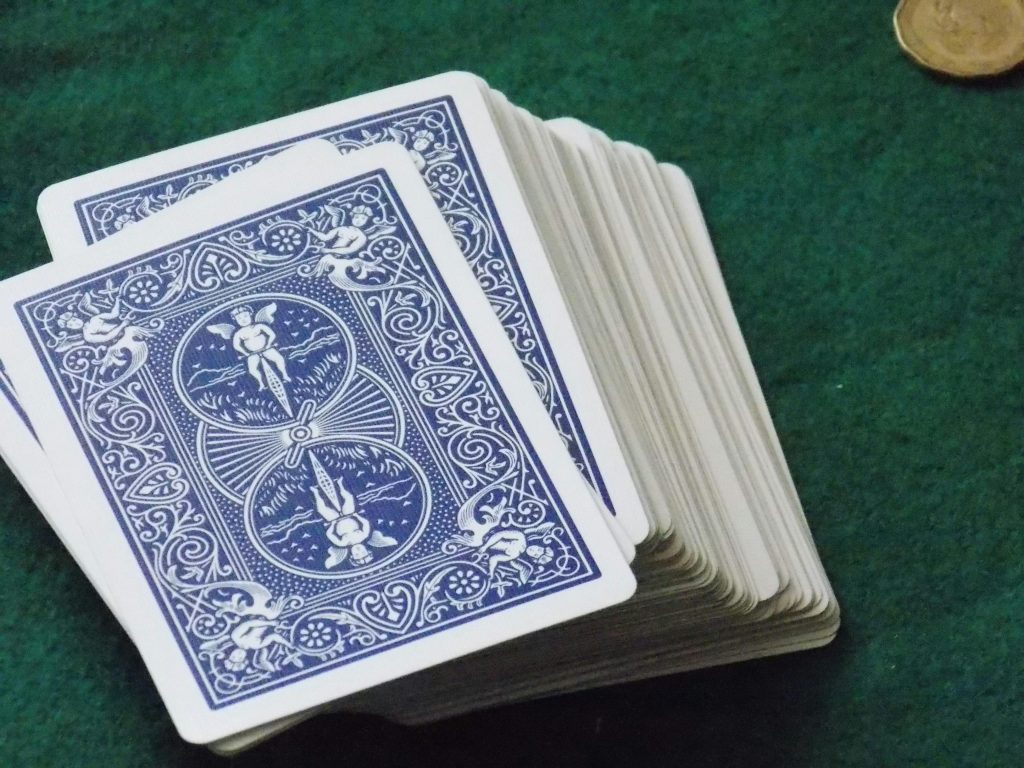
A deck of cards

To begin a 2-player game of Rummy, start with a single standard deck of 52 cards. First, you’ll need to shuffle the deck thoroughly to ensure a random distribution of cards. Then, both players are dealt a certain number of cards to form their hands, and the remaining deck forms the stock from which you will draw cards during the game.

Dealing Cards

  • Shuffle the deck thoroughly to mix up the cards.
  • Deal 10 cards to each player, doing so one at a time and alternating between players.
  • Place the remaining cards facedown to create the stock, leaving room for a discard pile.

The Role of the Dealer

  • Decide who will be the dealer. This can be determined by any method you choose, such as a high card draw or coin toss.
  • The dealer is responsible for shuffling the deck at the start and dealing the hands to each player.
  • After dealing, the dealer turns the next card face up to start the discard pile. The game then commences with the non-dealer.

Gameplay Mechanics

In Rummy for 2 players, your ability to outmaneuver your opponent largely hinges on your skill in drawing and discarding cards, forming melds, and laying off cards strategically throughout the game. Each turn presents a new opportunity to progress toward victory.

Drawing and Discarding

At the start of your turn, you draw one card, either from the face-down draw pile or the top card from the face-up discard pile. The choice rests with you and depends on the strategy you’re implementing. After picking a card, you must discard one card to end your turn, signaling to your opponent that it’s now their chance to play. Maintaining a balance between the cards in your hand and potential combinations is key.

Forming Melds

A meld is a set of three or four cards of the same rank, or a run of three or more cards in sequence of the same suit. To lay down melds, the cards must be placed face-up on the table during your turn. Forming and revealing melds is the heart of the game as it’s how you ultimately score points.

Laying Off Cards

After forming your own melds, you can add on to existing melds, which is known as laying off. This means if there’s a sequence on the table (like a 7, 8, and 9 of hearts), and you hold a 6 or 10 of hearts, you may add it to this sequence. However, remember you cannot lay off cards until you’ve played your initial meld.

Scoring and Winning

Two players lay down their winning hands in a game of rummy, with a triumphant expression on their faces

In 2 player rummy, your main objectives are to track your points meticulously and understand how to ‘go out’ to end the game. Let’s break down exactly how you keep score and pave your way to victory.

Tracking Points

In rummy, the cards have specific point values that are crucial for scoring. Numbered cards are worth their face value, so a 7 of diamonds is worth 7 points. The face cards (Jack, Queen, King) each count as 10 points, while an Ace can either be 1 point or 11 points, depending on the variation you’re playing. At the end of each hand, you tally points for the cards you’ve melded (laid down in combinations) and subtract the points of cards you’ve left in your hand. Your objective is to have the highest score by the end of the game by melding your cards and minimizing the points left in your hand.

Going Out and Ending the Game

To ‘go out’ and potentially win the game, you must have melded all your cards into sets and runs, and have one final discard. The game can end in two ways: by ‘going out’ in the traditional sense, where you have no unmelded cards left, or by ‘going rummy’, which occurs when you meld all your cards at once, without previously laying down any sets or runs. When you ‘go out’, you stop the hand and the points of your opponent’s unmelded cards are added to your score. The game continues over a predetermined number of rounds or until a certain point score is reached, and the player with the highest score at the end of the session wins the game.

Advanced Strategies

In mastering two-player rummy, diving deep into the use of jokers and wild cards, and effectively managing your hand can tilt the game in your favor. Here’s how these strategies play a crucial role.

Using Jokers and Wild Cards

Jokers and wild cards are the game changers in rummy. They can enhance your hand by acting as substitutes for missing cards in a combination. Make sure to use jokers to complete a run or set, especially a high-value one, to reduce your point load. A wild card stands in for any card you choose, giving you the flexibility to form a pure sequence quickly. Remember, the objective is to keep your opponent guessing about your game plan while maximizing the potential of your hand.

  • Maximize wild cards: Use them wisely in combinations to keep options open.
  • Balance use: Don’t use wild cards in pure sequences unless necessary.

Managing Your Hand

Managing your hand involves organizing your cards in a way that allows you to form valid combinations rapidly. With each turn, evaluate your cards and decide whether to retain or lay off cards, making it harder for your opponent to track your moves. At the onset, aim for a pure sequence to reduce the risk of high points if your opponent declares a win. Keep an eye on the discard pile to anticipate your opponent’s needs and strategically withhold cards they might be collecting.

  • Organize your hand: Group potential combinations together.
  • Be observant: Keep track of discarded cards to predict your opponent’s strategy.
  • Pure sequence first: Prioritize forming a pure sequence to minimize points.

By considering these strategies and applying them to your gameplay, you’ll improve your chances of outmaneuvering your opponent and inching closer to victory.

Frequently Asked Questions

In a 2 player Rummy game, you’ll find that the dynamic is more focused and fast-paced compared to games with more players. Here are some specific questions to help you navigate the rules and strategies.

How do the rules differ in 2 player Rummy compared to 3 player games?

In 2 player Rummy, each player is typically dealt 10 cards, allowing for a more personal and direct game. In contrast, a game with three or four players usually has each person starting with seven cards. This difference affects the complexity and the potential combinations of hands you can play.

Are there different winning strategies for Rummy when playing with only one opponent?

When you’re facing a single opponent in Rummy, your winning strategy should be more aggressive, focusing on quick melds and keeping an eye on your opponent’s discards to anticipate their moves. It’s crucial to adapt based on the flow of the game, which can shift rapidly when playing head-to-head Rummy.

Filed Under: Rummy

Scopa Card Game Strategy: 6 Essential Tips to Master the Game

March 8, 2024 By editor

Welcome to my guide on mastering Scopa, the classic Italian card game. Learn how to dominate by capturing valuable cards, executing perfect Scopas, and optimizing your Primiera score. The article breaks down essential strategies, from smart card play to advanced tactics like fishing and strategic discarding. Whether you’re playing one-on-one or in a team, these tips will sharpen your game.

Scoring Strategies

In Scopa, maximizing your point gain each round is crucial. I focus on achieving Scopas, prioritizing my captures, and calculating the Primiera, all of which are essential for a strong scoring strategy.

Achieving Scopas

Scopas are a key to scoring in this game. I always aim to clear the table with a capture, as this nets me an additional point for each Scopa. To do this effectively, I pay close attention to the cards in hand and the table, calculating potential combinations that could leave the table empty after my turn.

Priority of Captures

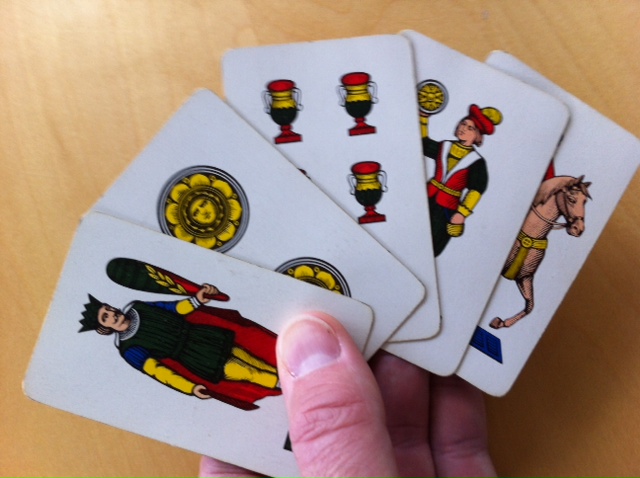
Capturing valuable cards is essential. I focus on securing cards that are part of the Primiera set or have point values, like the settebello (the seven of coins). For example, capturing a large number of coins can be a game-changer because of their scoring potential. The settebello, which is the seven of coins, is particularly worth targeting as it is worth one point on its own.

  • Coins: Aim to capture as many coins as possible, especially higher-value ones.
  • Cards: Capturing the most cards can lead to additional points.
  • Settebello: Securing the seven of coins is also a strategic move.

Calculating Primiera

Calculating my Primiera score involves careful consideration. I track my highest cards in each suit—coins, cups, swords, and clubs—and compare values using the Scopa scoring system. For instance, Sevens are top-ranking, followed by Sixes, Aces, Fives—it’s like playing tressette with just a subset of cards.

  • Primiera Scoring:
    • Sevens: Highest value for Primiera.
    • Sixes: Next in line and vital for counteracting opponent’s Sevens.
    • Aces: Important, but not as much as Sevens or Sixes.

Advanced Techniques

OK now that we’ve learned the basics, let’s move onto the advanced tactics and explore a few strategies that can help you become a more formidable Scopa player.

Fishing for Cards

When I’m fishing for cards, I keep a keen eye on the table and aim to capture multiple cards in a single turn. This is often possible when I notice a combination of cards that add up to the value of a card I have in my hand. For instance, if there are a 2 and a 4 on the table, and I have a 6, I’ll play it to capture both, thus clearing the table and potentially setting myself up for a Scopa on the next turn.

Strategic Discarding

Discarding plays a pivotal role in my Scopa strategy. My goal is to discard in such a way that it minimizes the possibility of my opponents capturing many cards. I tend to discard higher-value cards when it seems less likely that they can be captured, or when I wish to bait my opponents into leaving a setup that I can capitalize on during my next turn.

Memorizing Cards

One of the most crucial skills I’ve developed is memorizing which cards have been played. This allows me to make informed decisions about which cards to play and when to play them. By keeping track of this, I also get a better sense of what cards are likely still in my opponents’ hands, which in turn informs my fishing and discarding strategies. An effective Scopa player, like in Cassino, must remember the key cards that influence scoring, such as the 7 of coins, which is part of the “Primiera”.

Winning the Game

To emerge as the winner in Scopa, I center my play on scoring efficiently throughout the game. By the time we reach the end of the game, a clear strategy for accumulating points is key.

My primary goal is to capture as many cards as possible, focusing on valuable cards to increase my points. Sweeping the table clean in a move called a Scopa earns me an additional point, which can often be the decisive factor in tight games.

I keep track of the most cards captured because this gives me a point advantage. Here’s how the points usually break down at the end:

  • Most cards: 1 point
  • Most Coins: 1 point
  • Settebello (the 7 of coins): 1 point
  • Primiera: 1 point

In case of ties, which are not uncommon, we share the points. This can add a layer of complexity to my strategy because I need to be mindful not just of my own point tally, but also my opponents’.

I also focus on the concept of Scopas. Each Scopa I achieve gives me an additional point. These can add up and often clinch my victory. It is a moment of celebration and can be seen as a prize for my clever play.

Capturing cards that lead to scoring is essential, but I also need to anticipate my opponent’s moves and adapt my plans accordingly. It’s a balance between being aggressive to gain points and strategic to prevent my opponent from scoring.

Remember, the game doesn’t end until the last card is played, so every play can turn the tide. You’ve gotta stay vigilant and adaptable until the very end.

Frequently Asked Questions

In this section, I’ll answer some of the most common questions about strategizing in Scopa to help you win.

How does the number of players affect strategy in Scopa?

When the number of players varies, my Scopa strategy shifts significantly. Playing one-on-one requires a more aggressive approach, focusing on denying my opponent valuable cards. In contrast, multiplayer games involve predicting not just one, but several opponents’ moves, making it more about tactical card retention and partnerships.

What tactics should you use to capture the most valuable cards in Scopa?

To capture the most valuable cards, such as the Settebello (the seven of coins) or cards worth points, I always pay close attention to what has been played and try to bait my opponents into leaving valuable cards exposed. Timing sweeps, or ‘Scopas’, when I can clear the table, also maximizes my card captures.

How can you track your opponent’s cards during a Scopa game?

Tracking is key in Scopa. I try to remember which cards have been played and which ones are likely still in my opponent’s hands or are yet to be dealt. Keeping mental notes on high-value cards and suits majority helps me anticipate their moves and counteract strategically.

What are some tips for forming the best team strategy in a 4-player Scopa game?

In a 4-player team game, communication with my teammate is subtle yet crucial. We focus on setting each other up for capturing high-value cards and Scopas. Additionally, we decide strategically who should go first to control the flow of the game and pay attention to our opponents’ tendencies to exploit their strategy.

Filed Under: Scopa

The 4 Most Common (and Best) Asian Domino Games to Try Next

March 8, 2024 By editor

If you’re into games that mix a bit of strategy with cultural depth, you’ve got to check out these four Asian domino games: Tien Gow, Pai Gow, Tiu U, and Kap Tai Shap. Each of these games has its own vibe and rules, but they all share roots in Asian traditions and have been played for centuries.

Tien Gow is all about using a 32-tile set smartly, Pai Gow mixes poker elements with dominoes, Tiu U is for the trick-taking fans, and Kap Tai Shap offers a unique gameplay twist.

They’re not just games; they’re a way to connect with history and have a blast while you’re at it. Give these a try and you might just find your next game night obsession.

Tien Gow

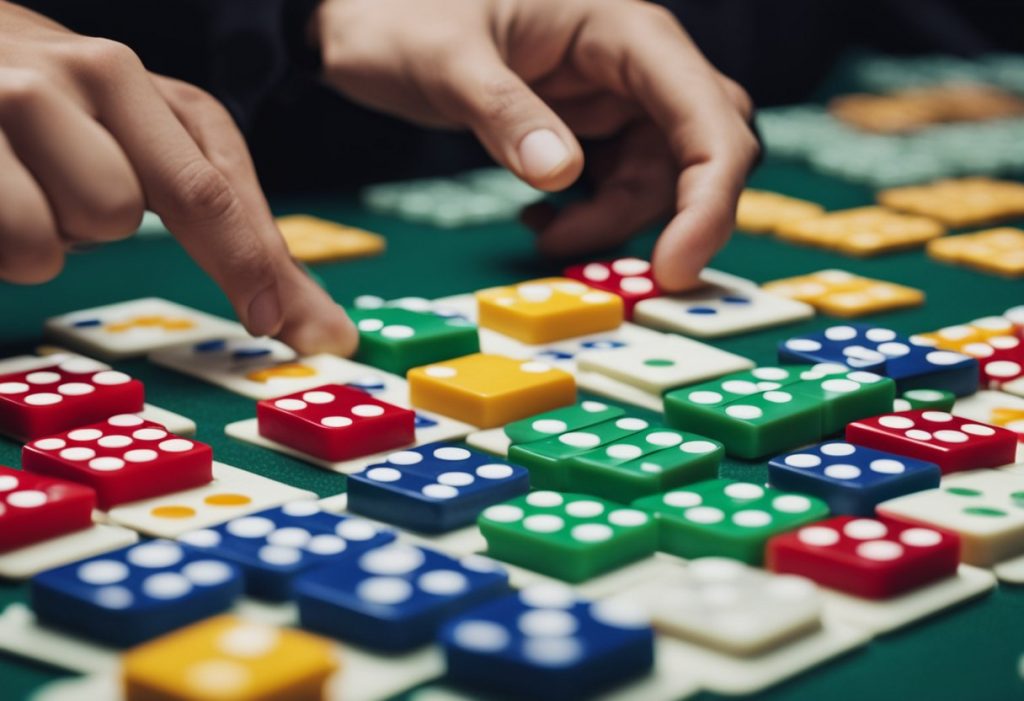
Hands playing tien gow dominoes

When I play Tien Gow, I’m immersing myself in a traditional Chinese gambling game with a history that stretches back centuries. This game, also known as Tin Kau, fascinates me with its complexity and the use of special Chinese dominoes. It’s unique because it combines the elements of strategy and chance in a social, four-player setting.

The game is played with a set of 32 dominoes, and what captures my attention is how each domino has its character and role within the game. The dominoes are split into two suits: Civil and Military, each with a different ranking system. The Civil suit is considered higher than the Military, which really gets me thinking strategically about how I play my tiles.

Basic Rules:

  • Players: 4
  • Objective: To score points by winning tricks
  • Equipment: Set of 32 Chinese dominoes

The gameplay starts with the dice being thrown to determine the banker, a role that rotates among players. In my experience, being the banker can significantly influence the game’s progress. We each receive eight tiles, and just like in bridge or spades, the goal is to outplay the other players by taking tricks.

Scoring in Tien Gow:

  • Civil suit ranks higher than Military
  • Intricacies of pairings and combinations are crucial to winning tricks

Being a fan of trick-taking games, I find Tien Gow’s depth of strategy both challenging and rewarding. Here are the rules I learned by if you’re looking to get into this classic game.

Pai Gow

I recently discovered Pai Gow, a captivating game that is considered one of the oldest forms of dominoes, with roots in ancient China. It’s fascinating to learn it’s closely related to Western dominoes, but with its own unique set of rules and strategies.

What sets Pai Gow apart is its combination of traditional domino pieces with intricate betting rules. I enjoy playing with a set of 32 tiles that display various permutations of dots, which some might mistake for a set of Western dominoes at first glance. However, upon closer inspection, you’ll quickly see that Pai Gow tiles have distinct combinations for gameplay.

Here’s a brief run-through of how the game works:

  • Initial Deal: Every player receives 8 tiles.
  • Objective: The main goal is to form two hands (a “high” hand and a “low” hand) that both beat the dealer’s corresponding hands.
  • Hand Rankings: Understanding the ranking system is crucial, as it is quite different from other tile or card games.

The Play:

  1. Each player arranges their tiles into two hands.
  2. After all players have set their hands, they compare them with the dealer’s hands.
  3. Winning both hands means winning the bet, losing both loses the bet, and winning one means a push.

As you dive into the world of Pai Gow, it’s clear that the game is not only about luck but also involves a fair amount of strategy. I like to think of it as a chess game: every move you make with your tiles can have a significant impact on the game’s outcome. If you’re fascinated by games of skill with a rich cultural heritage, Pai Gow is definitely worth exploring.

Tiu U

Tiu U is an intriguing game from Asia that has piqued my interest for its simplicity and depth. The name translates to “fishing,” indicative of the game’s central mechanic where players “fish” for matching tiles. This game truly stands out due to its use of two sets of Chinese dominoes, totaling 64 tiles, and it accommodates either two or three players. I find its unique blend of strategy and luck quite captivating.

In Tiu U, preparation begins with shuffling the tiles face down and then stacking them into a “woodpile” in columns of four. This woodpile formation is a distinguishing feature that I particularly appreciate, as it adds an element of uncertainty to each round. Once the tiles are arranged, the first action is to lay out four stacks of four tiles each, all face-up, in the center of the play area.

Gameplay is straightforward but requires strategic thinking. Each player draws their hand from the woodpile; for three players, each takes two stacks, resulting in eight tiles each. The objective is to match one of your tiles with one of the central tiles by half or both halves. It’s a game that rewards a keen eye and foresight, as you aim to deplete your hand while preventing others from doing so.

  • Start: Shuffle tiles and form the woodpile
  • Deal: Reveal 16 tiles in the center
  • Objective: Match tiles and empty your hand

Although it might sound complex initially, Tiu U is quite accessible once you grasp the basic rules. It’s a game I’ve enjoyed both for its competitiveness and as a means to connect with friends over a shared challenge.

Kap Tai Shap

When I play Kap Tai Shap, I’m engrossed in a fascinating rummy-style domino game. It’s a game that’s both traditional and requires a combination of strategy and luck. It’s such a great game-night game with your friends.

The goal in Kap Tai Shap is quite straightforward: be the first to form a winning hand comprised of pairs of dominoes. Here’s the gist of what makes up a valid winning hand:

  • One Identical Pair (Ngán): A pair of exactly the same dominoes.
  • Four Mixed Pairs: Each pair must have a total of either 10 or 20 spots. An intriguing quirk is counting the [4-2] tile as 3 spots.
Pairs NeededTotal SpotsUnique Rule
1 identical pair–‘Ngán’ Pair
4 mixed pairs10 or 20[4-2] counts as 3

The game starts by dealing tiles to each player. Players then draw and discard tiles aiming to build the required pairs. The process of draw and discard reminds me of classic card games, but the use of Chinese dominoes gives Kap Tai Shap a distinct charm.

Moreover, I noticed that despite its simplicity, there’s a depth of strategy involved. Deciding which tiles to keep or discard can turn the tide of the game, making each choice crucial.

Interested in exploring the rules further? Here’s the detailed rules for Kap Tai Shap.

Frequently Asked Questions

Where can I find the rules for Asian domino games?

The rules for various Asian domino games can be found on dedicated cultural game websites. For detailed rules and strategies, I suggest checking out resources like BoardGameGeek or WikiHow, which offer in-depth guides for different games. Plus we have a whole bunch of game rules here at learnplaywin.net.

What is the best strategy for winning Asian domino games (in general)?

While strategies can vary between different games, a good approach is to pay attention to the tiles you and your opponents have played and to try predicting what might be played next. It’s a strategic move to keep track of the tiles for a better chance at victory.

What is the name of the traditional Chinese domino game Pai Gow?

The original name of Pai Gow is “牌九” (Pái Jiǔ) in Chinese, which literally translates to “card nine” or “make nine”.

Are Mahjong and dominoes considered similar games?

Mahjong and dominoes are often mentioned together since they both involve strategic tile matching. Despite visual similarities, they are distinct games with different rules and gameplay dynamics. Mahjong typically involves drawing and discarding tiles to form specific sets, whereas domino games often revolve around laying down matching numbers end-to-end.

Filed Under: Dominoes

Understanding the Ecological Cost of Gambling

March 6, 2024 By editor

Crashing waves on rocks in the ocean

Gambling has captured the attention of millions, presenting the thrill of risk with the promise of reward. Gone are the days when one had to physically visit the sprawling complexes of traditional casinos to indulge in such pursuits. Today, players can easily access a wide array of games and betting options with just a few clicks, including the opportunity to play at Hellspin Casino.

The Environmental Tale of Modern Betting

In the age where convenience is king, online platforms have flourished, transforming the gambling experience into one of accessibility. Yet, for every virtual jackpot and digital spin, there is an unseen toll on the environment — a complex web of energy demands that power servers and network infrastructure, creating a ripple of carbon footprints across the digital landscape.

Energy Stakes: The Carbon Footprint of Digital Play

While players might enjoy the ease of accessing gambling services online, the cost is a heavy one for the environment. The operational demands to keep online platforms up and running are high, driven by a global network of data centers that require massive energy consumption to function ceaselessly, often relying on non-renewable energy sources that contribute to global warming and climate change.

Traditional Casinos and Their Environmental Handprint

Traditional, land-based casinos present a tangible manifestation of gambling’s environmental impact. The physical structures, often grandiose and energy-intensive, cast a weighty ecological shadow through land use, energy consumption, and waste generation. Their operations necessitate a substantial inflow of resources, from water and electricity to single-use products that find their end in landfills.

Shifting the Odds Towards Sustainability

People want the gambling world to be better for the Earth. This means betting websites could use clean energy, and real casinos could waste less and protect nature. If we, the players, choose to play in ways that are good for the planet, the gambling places will change faster to be more green.

The Easy Way to Bet

These days, everyone can gamble from anywhere, all thanks to the internet. You no longer need to go to big casino buildings to play games and try your luck. It’s all online now.

Saving Energy Online

Online betting sites need a lot of power to work, and that’s not great for our air and water. But they can make changes, like using energy from the sun or wind, to make things better for our planet.

Big Casinos and Nature

Big casino resorts use up lots of land and water, which isn’t great for the trees and animals around them. They also need a lot of power to keep the lights bright and the machines running. There’s a push to make these places more careful about how they use natural resources.

Let’s Make Gambling Greener

All of us have the power to push for gambling that’s good for the Earth. If we ask for games that use less energy and support casinos that care about the planet, we can make a big difference for the future.

Conclusion: Betting on a Greener Future

The narrative of gambling’s environmental impact doesn’t end with resignation but opens the door to informed choices and changes. As awareness of its ecological implications rises, so does the power to reshape its narrative. Whether enjoying games at home or within the halls of towering casinos, a collective move towards ecologically-sound decisions can ensure the sustainability of both the pastime and the planet.

Filed Under: Online Casinos

How to Become a Sweepstakes Casino Pro

March 6, 2024 By editor

Lottery balls in a hopper

Online gambling fans now have two choices:

  • Online casinos
  • Sweepstakes casinos

At first, people weren’t that interested in sweepstakes casinos. However, because social gaming has become more popular, sweepstakes casinos have seen a major increase in users over with years. This is best illustrated by Chumba Casino, an online sweepstakes casino with over 1 million – yep, 1 million – accounts.

Naturally, now that sweepstakes casinos are on top, they’re becoming very competitive places. After all, sweepstakes casinos have plenty of real cash prizes up for grabs, so this shouldn’t come as a surprise. But here’s the big question: how do you become a sweepstakes casino pro?

Becoming a sweepstakes casino pro and winning more at the different casino games is actually easier than you think. Simply check out these tips and tricks so that you can start getting those all-important wins and get your hands on more sweeps coins.

Become a Sweepstakes Casino Pro: Tips and Tricks

1.    Start Using Sweepstakes Casino Bonuses

In the sweepstakes casino world, you can give yourself a serious advantage over other players by using the bonuses from sweepstakecasinobonuses.com. By doing this, you’ll get your hands on FREE SPINS, SWEEPS COINS, and more — just for creating accounts with different sweepstakes casinos. For instance, McLuck Casino currently offers 27.5 FREE SC for new members, which is a great deal. With your FREE SC, you can then place bets across different social games, win more SC, and then redeem the SC for real money prizes.

2.    Play High RTP Slots

Sweepstakes casinos allow you to play casino-style games for free, including online slots. What matters here is that you only play high RTP slots, which is a trick that all the pros use. By playing high RTP slots, you can tip the odds more in your favour and give yourself a higher chance of getting a return on your bets. So, the next time you’re browsing through social slots to play, only go with ones that have an RTP of 96% or higher.

3.    Manage Your SWEEPS COINS Smartly

Inside sweepstakes casinos, you don’t play with real money. Instead, you play using GOLD COINS and SWEEPS COINS. Out of the two, SWEEPS COINS matter the most, as they allow you to compete for real cash prizes. This is why you need to manager your SWEEPS COINS in a smart way and avoid splashing them all at once. Instead, be precise with the bets you place and set yourself a weekly spend limit, such as 10 SWEEPS COINS per week.

4.    Avoid Chasing Losses

Sweepstakes casinos are so much fun — but it’s important you avoid the mistake of chasing any losses. For example, if you were to lose 5 SWEEPS COINS through a single game, don’t suddenly start panicking and try to recoup them all. Instead, relax, step back, and plan your next move accordingly. Sometimes, what pro players will do is take a break until the next day, while others will place lower bets to reduce risk while slowly building back the coins they’ve lost.

5.    Play Skill-Based Social Games

Inside sweepstakes casinos, not all of the games are luck-based. Many of them are skill-based and adopt arcade-style gameplay, which provides you (the player) with a greater control over the outcome. Fish table games, also known as fish shooting games, are an excellent example of this. When you play a fish table game, you take control of different-sized weapons and shoot different fish swimming across the screen. For each kill you get, you’ll earn GOLD COINS or SWEEPS COINS. So, if you’re someone who prefers skill-based gameplay and strategy, this will appeal a lot to your style.

Filed Under: Online Casinos

  • « Previous Page
  • 1
  • …
  • 6
  • 7
  • 8
  • 9
  • 10
  • …
  • 60
  • Next Page »

LearnPlayWin.net

Skill Games Rules and Strategy Learn to Play, Play to Win

Recent Posts

  • Best RTP Slots: Highest Paying Online Games
  • Discovering the Best Online Casinos: Rankings, Bonuses and Game Variety
  • Best Online Casinos: How to Choose and Play with Confidence
  • What Actually Separates a Good Betting Site From a Great One
  • Brazilian Skill Games: Strategic Foundations

Search LearnPlayWin:

Complete Listing of Games

Click here to see a complete list of games we cover.

Copyright © 2026 LearnPlayWin.net · Privacy · Terms